Team of Extracting Xylooligosaccharides from Agricultural and Forestry Wastes went to Guangze County and Taining County of Fujian Province to carry out Youth's trip to build a red dream practice investigation and project landing docking
In order to study and implement Xi Jinping Thought on Socialism with Chinese Characteristics for a New Era and the spirit of the Nineteenth National Congress of the Party concerning precise poverty alleviation and leading the struggle against poverty, we should thoroughly practice the spirit of General Secretary Xi Jinping's important reply to the college students of the Third Competition Youth's trip to build a red dream, guide more young students into the old revolutionary areas and poverty-stricken areas, accept the baptism of ideology, learn the revolutionary spirit and inherit the red spirit. The project team of Extracting Xylooligosaccharides from Agricultural and Forestry Wastes of the College of Energy,Xiamen University, led by Vice Dean of the College of Energy,Xiamen University, Professor Wang Zhaolin, Minjiang Scholar and Vice Professor Zeng Xianhai, Director of Bioenergy Research Institute of Xiamen University, went to Guangze County and Taining County, Fujian Province, on August 1 and 2 for Youth's trip to build a red dream practice of the fourth China's Internet + College Students' innovation and entrepreneurship competition, as well as the docking of projects, in order to implement the measures of precision poverty alleviation, contribute to rural revitalization, and highlight the social responsibility of contemporary youth.
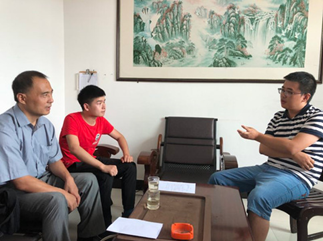
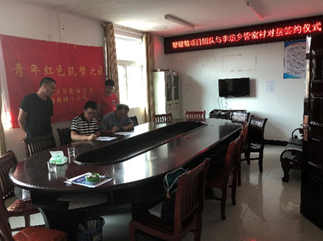
On August 1st, the project team of Extracting Xylooligosaccharides from Agricultural and Forestry Wastes came to Guangze County Development and Reform Bureau of Fujian Province to carry out research activities. They listened to the report on the economic and social development of Guangze County given by the relevant comrades in charge of the county development and reform bureau, and learned about the distribution of biomass energy in Guangze County, as well as the development bottlenecks faced by poor areas. The assistant professor Zeng Xianhai, also the project instructor, introduced the basic situation of the project of extracting xylo-oligosaccharides from agricultural and forestry wastes to the county development and reform bureau, and said that the project could effectively help farmers in poor areas to increase their income so as to truly achieve the goal of poverty alleviation. On the same day, under the leadership of the relevant responsible comrades of the county development and reform bureau, the project team came to Guanmi Village, Lifang Township, Guangze County, to conduct field research. The rice and tobacco industries in this area are flourishing, a large number of straws are abandoned every year, and a large number of moso bamboos are planted on the mountain. Due to the lack of technical support, it is difficult to convert them into wealth. The project team introduced the feasibility and technical advantages of the project to the villagers in detail. The available resources can be transformed into high value-added products through biomass chemical technology, which can not only turn waste into treasure, but also bring considerable economic benefits to villagers, and at the same time protect the local ecological environment. The project was fully recognized by the local villagers. The project team and Guanmi Village of Lifang Township signed a docking cooperation agreement on xylo-oligosaccharide extraction from agricultural and forestry wastes on the same day after negotiation.
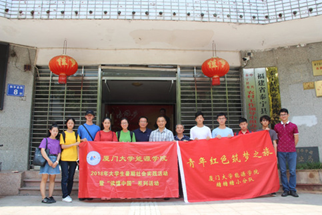
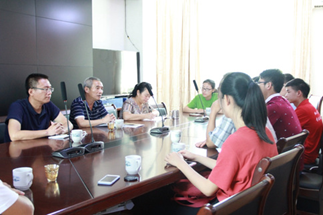
On August 2, the project team went to Taining County, Fujian Province to conduct field research. The team received a warm reception from the Agricultural Bureau of Taining County. Yang, deputy Director of the County Agricultural Bureau introduced to the project team the overall situation of reserves and disposal of agricultural and forestry wastes in this area in detail. And they’ve also been told that the fate of crop straw in Taining County was mostly used in biogas engineering, and some of the crop straw was not available. After the introduction of the project team, Yang highly recognized the project, and the project was highly in line with the actual needs of the county's development. He was eager to introduce the project technology to realize the diversification of the use of local agricultural and forestry wastes, fully tap local resources, adjust measures to local conditions, help the vast rural areas to increase income, and effectively implement the precise poverty alleviation policy to promote the economic development of Taining County. The County Agricultural Bureau and the project team exchanged in-depth discussions on the details about project cooperation, and reached a preliminary cooperation intention.
Through this Youth's trip to build a red dream practice research, students got close to farmers in the countryside, broadened the horizon and benefited a lot. Team members have a deep understanding of the real situation of crop reserves in poverty-stricken areas, which is conducive to the site selection of poverty alleviation projects in the future. They have a deep feeling that there is a general lack of awareness of turning waste into treasure to deal with the existing resources in poverty-stricken areas at present. Adapting measures according to local conditions, feasible and reliable technical support is of special importance and significance to rural poverty alleviation work. At the same time, team members have a precious experience. Students enjoy the joy of helping the peasants and helping them out of poverty with what they have learned. The era calls for talented people, and team members are deeply aware that as young students in the new era, they should bear the hope of home and country, shoulder the responsibility of rejuvenating the country by science and technology, play an important role in precise poverty alleviation and rural revitalization, and strive to contribute their talents and learning to the fight against poverty.